
Taekwondo and Kickboxing stand as two of the most widely practised stand-up striking systems in the world: one a traditional Korean martial art rooted in centuries of military heritage and philosophical depth, the other a modern combat sport forged in the rings of Japan, Thailand, and the West through the fusion of boxing and full-contact karate.
Though both revolve around punches and kicks, they evolved for different purposes, reward different skills, and create entirely different experiences on the training floor; this comparison explores their origins, techniques, rules, and real-world applications to help you understand what sets them apart and which one belongs in your life.
Quick Overview of Taekwondo and Kickboxing
Taekwondo: Origin, Philosophy, and Central Values
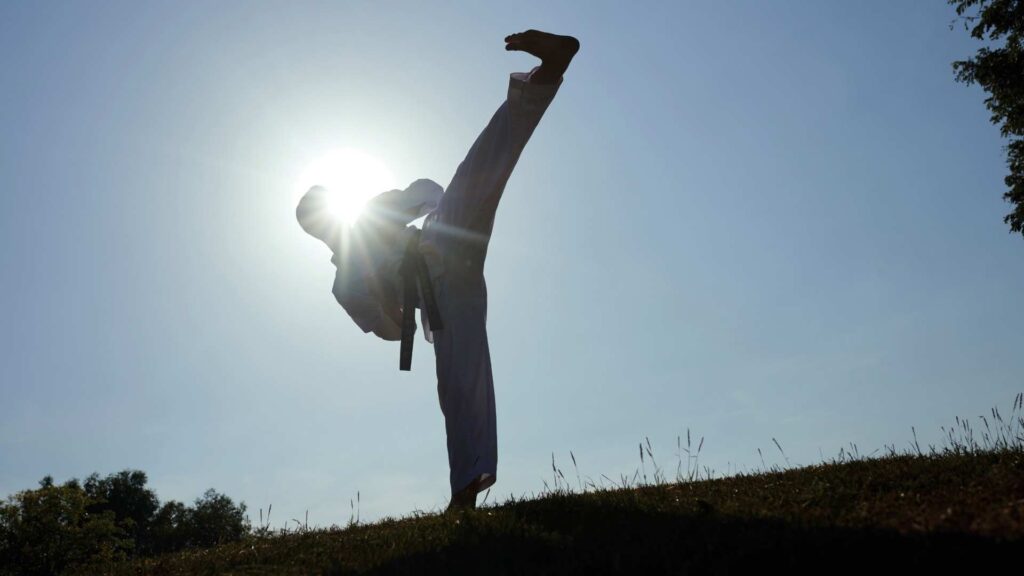
Taekwondo began in Korea and grew as a discipline that highlights respect, focus, and personal growth. Students are encouraged to build confidence, practice self-control, and carry a positive attitude inside and outside training.
Its culture blends martial skill with strong moral values, which makes it appealing to families and beginners who want structure along with physical training.
Taekwondo: Key Technical Focus
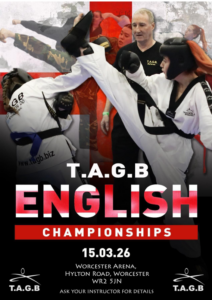
Under the Taekwondo Association of Great Britain (TAGB), training emphasises explosive leg techniques while balancing overall physical development. Students learn high kicks, spinning kicks, jumping kicks, and fast footwork that enhance agility and coordination.
Sparring is carefully controlled, with points awarded for clean, precise techniques rather than heavy punching or close-range fighting, making speed and accuracy the focus.
While other organisations, such as ITF or World Taekwondo, may vary in sparring rules or the emphasis on forms versus kicks, TAGB prioritises structured, age-appropriate training that builds confidence and discipline in children.
Taekwondo: Training Environment and Belt Progression
TAGB classes follow a traditional structure where students line up, practise poomsae (forms), and work through routines that develop focus, coordination, and respect. Progression is marked through a clear, milestone-based belt system, giving children a sense of accomplishment at every stage.
Unlike some other organisations where belt colours or promotion timing may differ, TAGB places emphasis on personal growth, character-building, and consistent development rather than rapid promotion.
Kickboxing: Background and Purpose
Kickboxing developed as a modern striking style created for practical combat and hard-contact competition. It blends boxing skills with powerful kicks to form an effective system that works well for fitness, self-defence, and ring fighting. The goal is to build a strong striking technique that feels natural in fast-paced situations.
Kickboxing: Key Technical Focus
Training teaches solid punches, simple but effective kicks, and strong pressure at close and medium range. Students learn how to move, block, and throw combinations with good timing. This makes the style straightforward, efficient, and useful for anyone who wants to learn real striking skills.
Kickboxing: Typical Gym Culture and Training Structure
Kickboxing gyms often feel energetic and practical. Classes usually include pad work, heavy bag training, partner drills, and conditioning to build strength and endurance. The environment is lively and supportive, with a focus on improving technique, staying active, and gaining confidence in striking.
Technique and Fighting Style Comparison
Striking Approach
Taekwondo relies on long-range kicking and fast, spinning techniques that allow the practitioner to score clean hits while keeping opponents at a distance. Speed is a major part of its strategy, so fighters often stay light on their feet and strike with quick, accurate kicks.
Kickboxing takes a different approach, using strong combinations that mix punches and kicks in a smooth flow. The style is heavily influenced by boxing, so fighters develop sharp jabs, crosses, and hooks along with reliable low and mid-level kicks.
Footwork and Movement
Taekwondo movement is light and explosive. Practitioners hop in and out, creating space to launch high or spinning kicks. The goal is to stay mobile and unpredictable. Kickboxing uses a more grounded stance that supports power and balance.
Fighters use steady steps, angles, and pressure to cut off space and force exchanges where their boxing and close-range tools shine.
Defensive Style
Taekwondo defence focuses on staying out of reach. Students learn to control distance, avoid attacks through quick footwork, and counter with fast kicks as soon as a gap opens. Kickboxing defence centres on guards, blocks, and counter-combos.
Fighters keep their hands high, slip or parry punches, and fire back immediately to break their opponent’s rhythm.
Competition Rules and Scoring of Taekwondo and Kickboxing
How Matches Work in Taekwondo
TKD matches often use a point-based system that rewards clean contact with kicks. Higher points are given for spinning or jumping kicks, and head kicks score well.
Punches are usually limited and scored lightly. This setup encourages speed, precision, and long-range kicking.
How Matches Work in Kickboxing
Kickboxing matches involve continuous action with punches and kicks allowed throughout the fight. Leg kicks are usually legal, and power plays a significant role. Judges score based on effectiveness, impact, and control of the round, so fighters must show strong technique and steady pressure.
How Rules Influence Technique and Strategy
Under TAGB, the rules encourage students to focus on speed, precision, and controlled technique. Because points in sparring are awarded for clean, accurate kicks rather than heavy punches or close-range fighting, children learn to maintain distance, use high-value kicks effectively, and develop quick footwork.
This structured rule set shapes both the techniques taught in class and the strategy students use during sparring.
While other organisations like ITF or World Taekwondo may emphasise different scoring or contact rules, TAGB prioritises safety, discipline, and skill development, ensuring children gain confidence, control, and strategic awareness in every session.
Training Experience: Taekwondo vs Kickboxing
What a Typical Taekwondo Class Looks Like
A TKD class usually begins with stretching and warm-ups, followed by kicking drills, forms practice, and partner drills for timing and control. Sparring rounds may be included, and the atmosphere feels structured and traditional.
What a Typical Kickboxing Class Looks Like
Kickboxing sessions focus on pad work, bag training, partner drills, and combinations. Classes often include boxing drills, cardio work, and strength exercises to build power and endurance. The pace feels lively and straightforward.
Conditioning Differences
Taekwondo builds flexibility, balance, and leg strength through repeated kicking and fast movement. Kickboxing develops strong overall conditioning due to its mix of punching, kicking, and constant full-body effort during pad work and combinations.
Application in Real-World Self-Defence
Strengths of Taekwondo in Real Situations
Taekwondo offers strong kicking power, quick reaction skills, and good distance control. Its fast leg strikes can work well in open space, giving the practitioner the ability to hit hard while staying out of reach.
Strengths of Kickboxing in Real Situations
Kickboxing provides practical tools for close- and medium-range combat. Strong punches, reliable kicks, and solid guards allow the practitioner to stay composed in chaotic moments. The conditioning and pressure training also help during real confrontations.
Limitations Each Style May Face
Taekwondo can struggle in tight spaces or moments that require frequent hand use. Kickboxing can be challenged by grappling situations or scenarios where striking distance is hard to maintain. Each style has clear strengths, but both work best when paired with awareness and situational control.
Benefits Comparison of Taekwondo and Kickboxing
Physical Benefits
Taekwondo builds strong legs, sharp balance, and excellent flexibility due to its focus on repeated kicking and fast movement. It also improves coordination and agility, which helps students move with better control.
Kickboxing delivers a full-body workout that strengthens the upper body, core, and lower body through powerful punches, steady footwork, and nonstop combinations. The constant pad work and conditioning help boost stamina, strength, and overall athletic ability.
Mental and Lifestyle Benefits
Taekwondo promotes discipline, focus, and confidence through its structured training and belt progression. Students learn patience, respect, and steady self-improvement, which often shows in school, work, and daily habits.
Kickboxing builds mental toughness, stress relief, and self-assurance by pushing students to stay active and handle pressure during training. The intense sessions help clear the mind, improve mood, and give a strong sense of accomplishment after each workout.
Which One Fits Your Goals: Taekwondo vs Kickboxing
Ideal Learners for Taekwondo
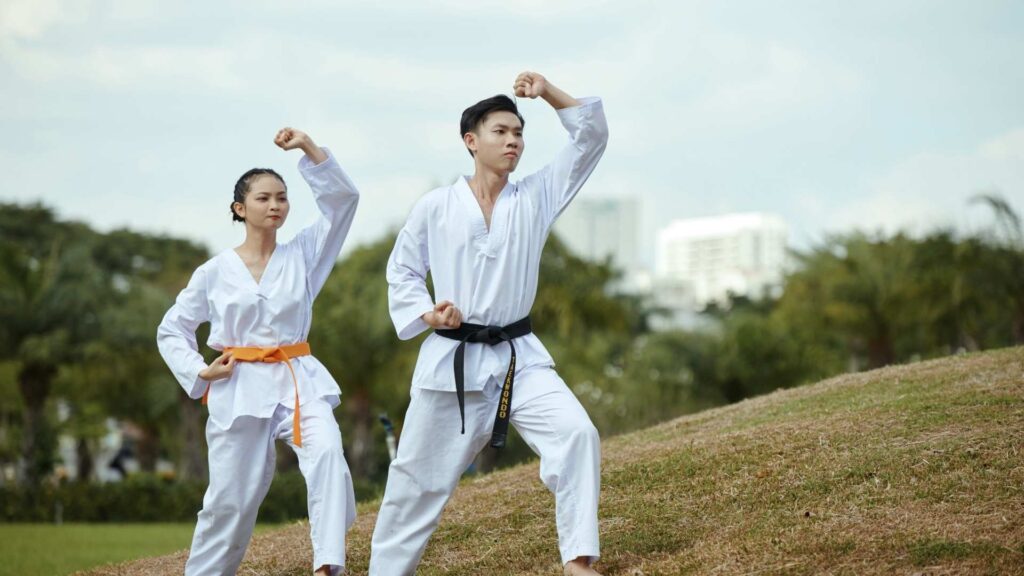
Taekwondo suits students who enjoy structured lessons, steady skill progression, and a traditional style that highlights discipline and respect. It works well for kids, beginners, and anyone who likes learning high, fast, and creative kicks. If you want better flexibility, balance, and agility along with a strong sense of focus, this style is a comfortable fit.
Ideal Learners for Kickboxing
Kickboxing is great for people who want a practical striking system and a strong full-body workout. It appeals to learners who enjoy fast-paced classes, pad work, and training that builds real striking skill. This style fits adults, teens, fitness-focused beginners, and anyone who wants solid punching power, good conditioning, and confidence in close-range situations.
How to Choose Based on Personal Objectives
Your choice comes down to the results you want. Pick Taekwondo if you aim to build discipline, master dynamic kicks, and train in a traditional setting with a clear belt journey. Pick Kickboxing if your priority is real-world striking, strong cardio, and classes that challenge your endurance while sharpening practical skills.
Both offer valuable benefits, so go with the style that matches your goals and the type of training environment you enjoy most.
If you’re ready to take the next step in your martial arts journey, come train with us at Evesham TAGB. Whether you want to master dynamic kicks through Taekwondo or develop practical striking and full-body fitness with Kickboxing, our supportive instructors and friendly training environment will help you reach your goals.
Book a free trial session today and experience the focus, energy, and confidence that martial arts can bring.
Wrapping Up
Taekwondo and Kickboxing each offer unique benefits—Taekwondo builds agility, balance, and precision through structured kicking techniques, while Kickboxing develops practical striking, strength, and endurance with fast-paced, full-body training. Both improve fitness, confidence, and focus.