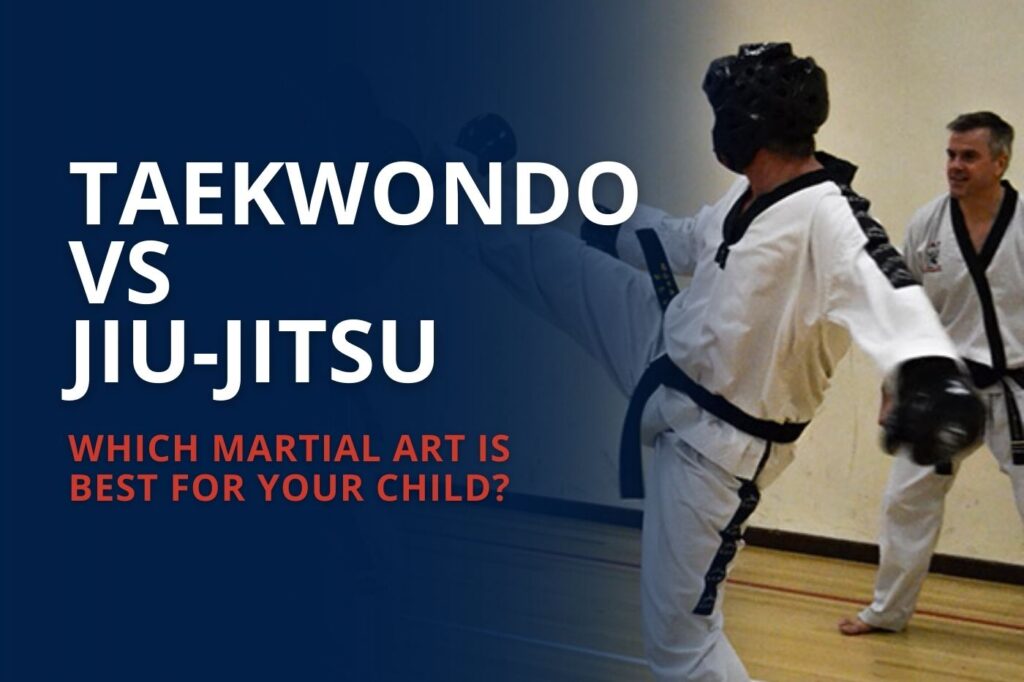
The right martial art for your child depends on their personality, learning style, and growth needs. Taekwondo provides a structured, supportive environment where young students build confidence, discipline, and respect through kicking, striking, and forms, with milestone-based progression that keeps them motivated and focused.
Brazilian Jiu-Jitsu (BJJ) offers a hands-on, grappling-focused approach, teaching problem-solving, adaptability, and practical self-defence through partner work and controlled sparring, making it ideal for older children or those who enjoy technical challenges.
Both arts promote physical fitness, mental resilience, and social skills, but each offers a distinct path for personal growth. This article explores TAGB Taekwondo and BJJ in detail, highlights their differences, and guides you in choosing the martial art that best fits your child.
Taekwondo Overview
Origins and Philosophy
Taekwondo is a Korean martial art with Olympic recognition, celebrated for its structured approach to training and emphasis on personal development. Under the guidance of the Taekwondo Association of Great Britain (TAGB), the focus extends beyond physical skill to fostering respect, discipline, and character in young students.
Children are taught core values such as courtesy, integrity, perseverance, self-control, and indomitable spirit. These principles are woven into every class, helping students not only develop martial arts skills but also build habits and attitudes that benefit them outside of the dojo.
Training for Kids
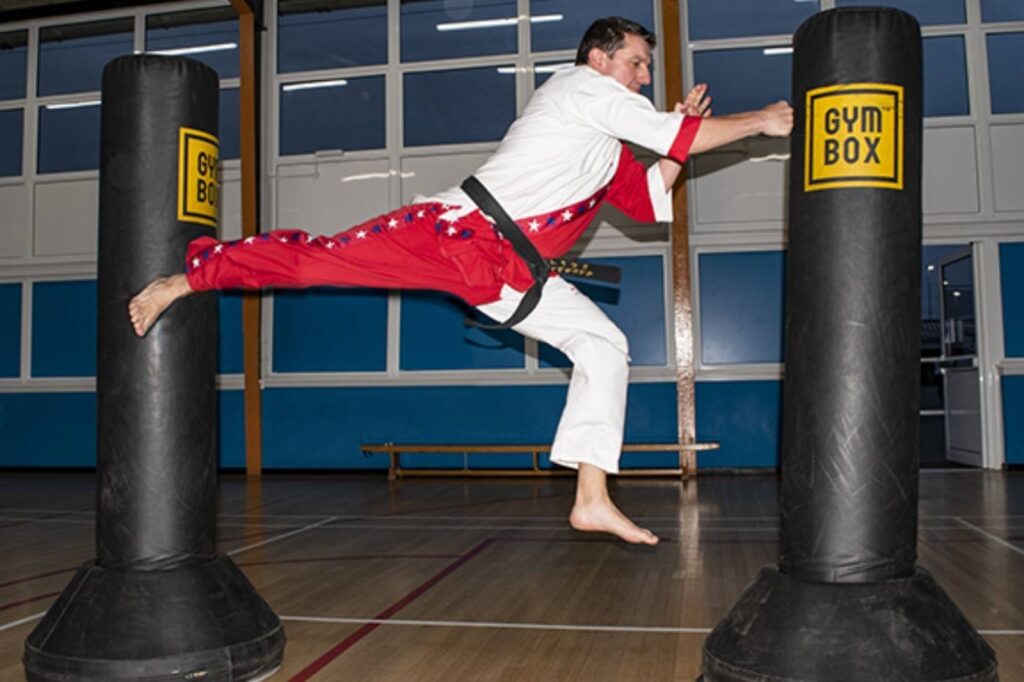
TAGB classes follow a structured curriculum designed to balance skill development with engagement and fun. Children learn poomsae (forms), choreographed patterns that teach technique, balance, and focus.
They also practice kihon (basic techniques), developing hand and leg strikes, blocks, and kicks in a non-contact setting. Age-appropriate sparring is introduced gradually, providing a safe way to apply techniques while:
- Building confidence and focus
- Improving coordination and balance
- Developing patience and perseverance
The emphasis on kicking, striking, and movement ensures children enhance physical fitness while also fostering mental growth.
Belt Systems
The TAGB belt system provides a clear and structured path of progression, prioritising personal development over rapid promotion. Children advance through belts in a consistent order, allowing them to experience accomplishment at every stage. Compared with other organisations, such as ITF and World Taekwondo, TAGB differs slightly in:
- Belt colours and ranking order
- Promotion timing and testing milestones
This slower, structured progression is ideal for children whose parents value discipline, focus, and character-building rather than fast-tracked competition.
Benefits for Children
Practising Taekwondo delivers a wide range of benefits across multiple areas of development:
- Physical: flexibility, balance, coordination, and overall fitness
- Mental: discipline, focus, patience, and resilience
- Social: teamwork, respect, and positive peer relationships
- Emotional: confidence, self-esteem, and pride in accomplishments
Safety and Environment
TAGB emphasises controlled contact and age-appropriate techniques to keep students safe. Instructors foster a nurturing and supportive environment where children of all skill levels can learn and progress at their own pace. Key features include:
- Engaging classes that maintain motivation and attention
- Techniques suited to each child’s age and ability
- Focus on personal growth, respect, and perseverance
With this approach, parents can feel confident that their children are developing not only physically, but also emotionally, socially, and mentally in a safe and structured environment.
Brazilian Jiu-Jitsu (BJJ) Overview

Origins and Philosophy
Brazilian Jiu-Jitsu (BJJ) is a grappling-focused martial art with roots in Japanese jujutsu, adapted and developed in Brazil. Its philosophy centres on practicality, adaptability, problem-solving, and humility, teaching children to think strategically while respecting their training partners.
Training for Kids
BJJ classes emphasise ground control, grappling, and submission techniques in a controlled environment. Training is hands-on, requiring partner interaction, which promotes cooperative learning and encourages kids to solve challenges together.
Belt System and Learning Curve
BJJ has a slower belt progression compared to Taekwondo, with an emphasis on mastering techniques over time rather than rapid promotions. It is particularly suitable for older children or those who enjoy technical challenges and practical self-defence skills.
Benefits for Children
Children gain multiple benefits from BJJ training:
- Physical: full-body strength (arms, core, legs), coordination, and endurance
- Mental: problem-solving under pressure, resilience, and focus
- Social: cooperation during drills and respect for peers
- Emotional: confidence in practical self-defence, stress relief, and perseverance
Safety and Considerations
Safety is maintained through supervised rolling (sparring) and the use of a “tap-out” system to prevent injury. While BJJ can be more physically demanding than some other martial arts, structured guidance ensures children can train effectively and safely.
Key Differences Between Taekwondo (TAGB) and BJJ for Kids
| Feature | TAGB Taekwondo | BJJ |
| Focus | Stand-up striking, kicking, poomsae, discipline | Ground control, grappling, submissions, adaptability |
| Class Environment | Structured, milestone-based, low-contact sparring | Hands-on, cooperative, problem-solving, controlled contact |
| Belt Progression | Regular promotions, clear milestones | Slower progression, mastery-focused |
| Self-Defense | Distance control, striking at range | Close-quarters control, leverage and submissions |
| Physical Development | Flexibility, balance, leg strength | Full-body functional strength, endurance |
| Mental/Character | Discipline, respect, focus | Resilience, problem-solving, adaptability |
| Best For | Younger children, structure-focused, confidence-building | Older children, practical self-defence, technical challenge |
How to Choose the Right Martial Art for Your Child
Consider Your Child’s Personality
Structured kids may thrive in TAGB Taekwondo with its clear steps and discipline. Hands-on, problem-solving children may prefer BJJ, which focuses on grappling and interactive learning.
Age & Physical Development
Younger children often do better in TAGB Taekwondo for balance and coordination. Older children can handle BJJ’s more technical, physically demanding training.
Focus on Personal Growth
Choose programs that prioritise character-building over competition. TAGB Taekwondo emphasises respect, discipline, and perseverance, while BJJ builds adaptability, problem-solving, and resilience.
Trial Classes
Attend trial lessons to see which style your child enjoys and engages with the most.
Instructor Quality
Look for patient, supportive instructors experienced with children who maintain a safe, nurturing environment.
- Check interactions between instructors and students
- Ensure classes are age-appropriate
- Confirm safety measures are followed
This helps parents pick a martial art that matches their child’s personality, age, and growth needs.
TAGB Taekwondo as an Ideal Choice for Character-Building
TAGB Taekwondo offers a safe, structured, and supportive environment where children can learn at their own pace. The classes are designed to encourage respect, discipline, and self-confidence, helping kids develop strong character traits that extend beyond the dojo.
The milestone-focused approach, such as progressing through belt levels, keeps children engaged and motivated, giving them a clear sense of achievement. At the same time, TAGB Taekwondo balances fun, fitness, and personal growth, focusing on developing well-rounded individuals rather than just competition or rapid advancement.
- Respect and Discipline: Children learn courtesy, integrity, and self-control.
- Confidence and Self-Esteem: Achievements like mastering forms or new techniques build pride and self-assurance.
- Engagement: Structured lessons and gradual milestones maintain motivation and interest.
- Holistic Growth: Physical fitness, mental focus, and social skills are nurtured equally.
This makes TAGB Taekwondo particularly ideal for parents seeking character-building and life skills for their children.
Summary: Taekwondo vs Jiu-Jitsu for Parents
TAGB Taekwondo is ideal for younger children who benefit from structured learning, milestone-based progression, and a focus on character development. It builds confidence, discipline, and respect while keeping classes fun, safe, and engaging.
Brazilian Jiu-Jitsu (BJJ) is better suited for older children or those looking for a technical challenge. It emphasises practical self-defence, problem-solving under pressure, and full-body grappling skills, helping kids develop resilience and focus through hands-on learning.
If you’re unsure which martial art is the best fit, why not see it in action? At our Evesham club, children can attend trial classes in TAGB Taekwondo or BJJ, letting them experience the environment, training style, and supportive instructors firsthand. This way, you can find the perfect match for your child’s personality and goals.